ML in Gene Therapy
Engineering AAV when the search space is the problem
Four Sequences That Worked
Four medicines that changed the last decade. Each depends on a deliberately chosen biological sequence.
ChAdOx1: The Vector Was Already There
A chimpanzee adenovirus, gutted and reloaded.
- Spike gene swapped in for E1
- Replication-deficient
- Shipped at fridge temperature
≈35 kb of DNA
Billions of doses. The virus is the courier, not the medicine.
The payload was written, not discovered — a spike sequence pasted into a vector backbone.
Voysey et al. (2021)
BNT162b2: The Courier Disappears
No virus at all. A sequence in a lipid droplet.
- Nucleoside-modified mRNA
- Lipid nanoparticle delivery
- Transient by design
4,284 nucleotides
Designed from a published genome in days.
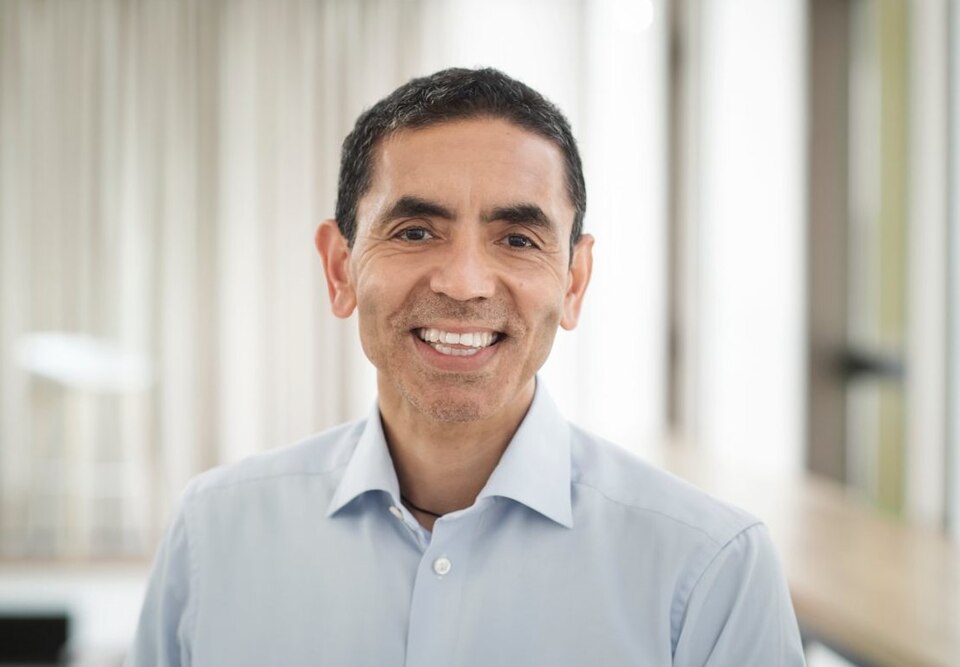
Uğur ŞahinBioNTech
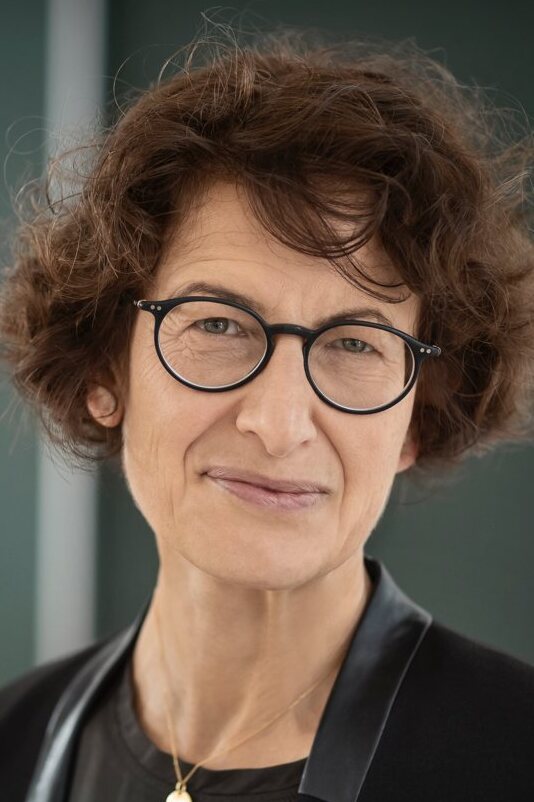
Özlem TüreciBioNTech
Polack et al. (2020)
Change the Letter, Keep the Message
Unmodified mRNA is read by the innate immune system as infection. It triggers interferon, and the message is destroyed before it is translated.
N1-methylpseudouridine can reduce innate sensing and improve translation. RNA purification and delivery also shape the response.
RNA chemistry and delivery determine how much protein the cell makes.
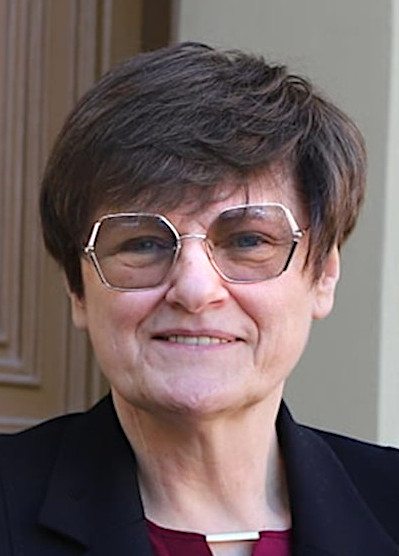
Katalin Karikówith Drew Weissman — Nobel Prize, 2023
Polack et al. (2020)
Delandistrogene Moxeparvovec: A Gene Cut to Fit
Duchenne muscular dystrophy. One dose, intended to last.
- rAAVrh74 to skeletal muscle
- Micro-dystrophin, not dystrophin
- Full-length gene is 11 kb — it does not fit
≈5 kb cassette
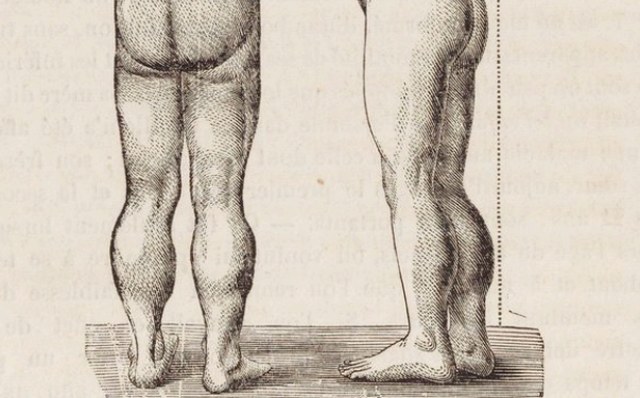
Calf pseudohypertrophy, from Duchenne’s own 1868 plates.
The courier is fixed. The cargo was redesigned.
Mendell et al. (2023)
Pembrolizumab: The Odd One Out
Not a vector at all — a protein, made by cells.
- Humanised IgG4 against PD-1
- Mouse-derived binding loops on a human frame
- Manufactured from a cell line
≈1.4 kb of coding sequence
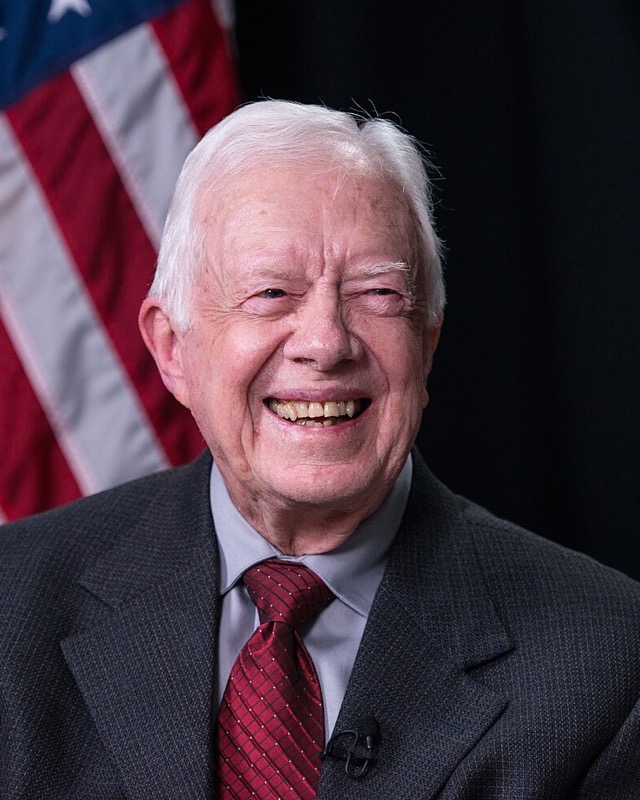
Jimmy CarterAnnounced metastatic melanoma in August 2015; clear scans by December
Melanoma in liver and brain, treated with surgery, radiosurgery and this antibody.
The product is a protein. The asset is the sequence.
Four Sequences, Drawn to Scale
Impact has nothing to do with length. The design problem is the same in every case.
The Virus Worth Borrowing
AAV is a defective parasite of other viruses. That defect is exactly why we use it.
Adeno-Associated Virus, Up Close
- 4.7 kb single-stranded DNA
- 60 subunits, T = 1
- ≈26 nm across
- No established human disease from natural AAV infection
Drag it.
Xie et al. (2002)
Where the Symmetry Is
Sixty identical subunits, related by the rotation group of an icosahedron.
- 5-fold ×6 — a channel at each
- 3-fold ×10 — the protrusions
- 2-fold ×15 — a depression at each
Every axis passes through the centre. Each order is a different local environment, and they behave differently.
Xie et al. (2002)
Everything in 4.7 Kilobases
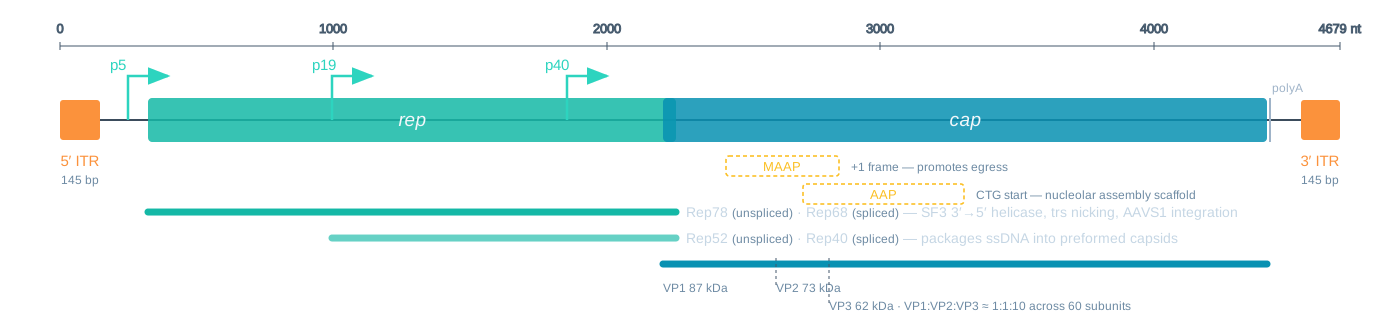
Two genes. Three promoters. Two more proteins hidden inside cap.
Samulski and Muzyczka (2014)
Four Rep Proteins We Throw Away
From p5 — Rep78, Rep68
Nick the terminal resolution site. Drive integration at AAVS1 on chromosome 19.
From p19 — Rep52, Rep40
Motor proteins. Thread the genome into a preformed capsid.
Each pair is one unspliced and one spliced product. All four are SF3 helicases, 3′→5′.
Delete rep and you delete site-specific integration.
Kotin et al. (1990)
Three Capsid Proteins, Unequal Shares
One ORF, three start sites.
| VP1 | 87 kDa | PLA₂ + NLS |
| VP2 | 73 kDa | dispensable |
| VP3 | 62 kDa | the shell |
Roughly 1 : 1 : 10 across the 60 subunits — about five, five and fifty.
VP1 is a minority subunit, and endosomal escape depends entirely on it.
Five copies out of sixty decide whether the particle ever gets out of the endosome.
Girod et al. (2002)
Two Genes in the Same Sequence
AAP — assembly-activating protein
Non-canonical CTG start, nested inside cap. Scaffolds assembly in the nucleolus.
MAAP — membrane-associated accessory protein
A +1 frame inside the VP3 region. Promotes egress.
MAAP was not found by looking. It fell out of a comprehensive mutational scan in 2019.
A previously unannotated gene emerged from systematic mutational data.
Defective by Design
AAV cannot replicate alone. It needs a helper.
Adenovirus — E1A, E1B55K, E2A, E4orf6, VA RNA
HSV-1 — UL5, UL8, UL52, UL29, UL30
For a vector this is a feature:
- Helper functions supplied from a plasmid
- No helper virus needed in plasmid-based production
- A vector that cannot replicate cannot spread
Replication incompetence is not a limitation. It is the product.
Samulski and Muzyczka (2014)
Why Not Adenovirus?
Good vaccine
- ≈8 kb payload
- Efficient, high expression
- Strong immune response
Poor gene therapy
- That same response clears transduced cells
- High seroprevalence
- Inflammatory at therapeutic doses
A vaccine wants an immune response. A gene therapy does not.
Dunbar et al. (2018)
Serotypes Are Surface Chemistry
Same fold. Same T = 1 shell. Nine variable loops on the outside.
- AAV2 → heparan sulfate
- AAV9 → terminal galactose
- VR-IV differs: AAV9’s spikes are blunter
Tropism lives on these loops.
From Virus to Vector
Delete everything that makes it a virus. Keep 145 base pairs at each end.
Strip It Down to the ITRs
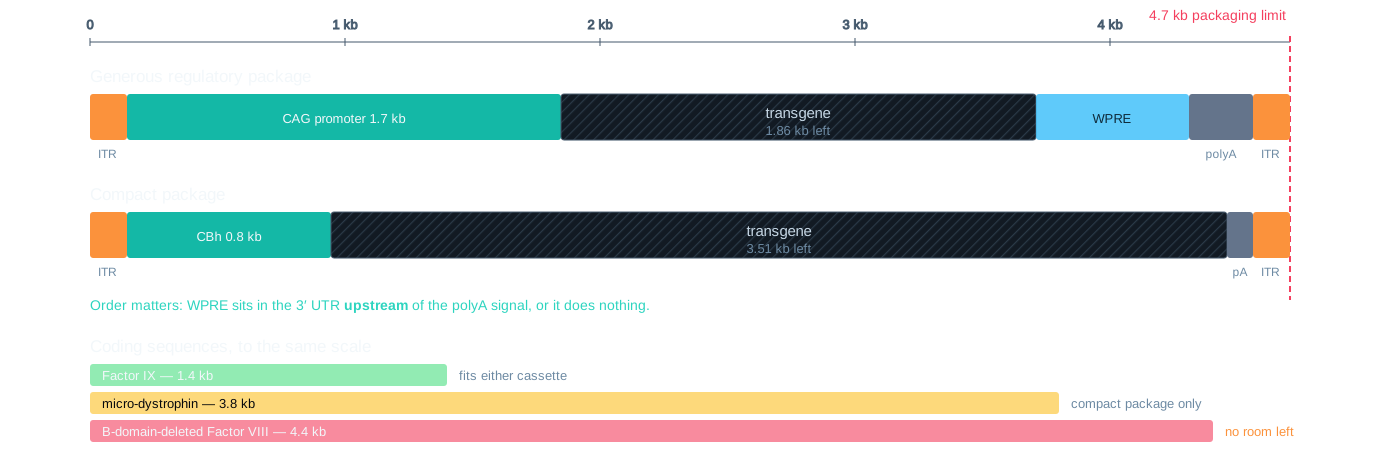
The Budget Decides the Medicine
| Payload | Size | Fits? |
|---|---|---|
| Factor IX | 1.4 kb | easily |
| micro-dystrophin | 3.8 kb | compact cassette only |
| BDD Factor VIII | 4.4 kb | nothing left over |
| dystrophin | 11 kb | never |
This is why Duchenne therapy is micro-dystrophin, and why haemophilia A is harder than haemophilia B.
A physical limit on a capsid is dictating protein design.
Mendell et al. (2023)
What the Budget Produced
| Product | Vector | Payload | Route |
|---|---|---|---|
| Zolgensma (2019) | AAV9 | SMN1 0.9 kb | intravenous |
| Itvisma (2025) | AAV9 | SMN1 0.9 kb | intrathecal |
| Hemgenix (2022) | AAV5 | F9 Padua 1.4 kb | intravenous |
| Kebilidi (2024) | AAV2 | DDC 1.4 kb | intraputaminal |
| Fayuvi (2026) | AAV9 | SGSH 1.5 kb | intravenous |
| Luxturna (2017) | AAV2 | RPE65 1.6 kb | subretinal |
| Elevidys (2023) | AAVrh74 | micro-dystrophin 3.8 kb | intravenous |
| Otarmeni (2026) | AAV1 × 2 | OTOF 6.0 kb | intracochlear |
Ordered by payload. Every one but the last sits well inside the 4.7 kb budget.
OTOF is 6 kb. It does not fit — so otoferlin ships as two vectors, each carrying part of the coding sequence, reconstituted inside the hair cell.
The budget did not move. The architecture did.
ssAAV or scAAV: Capacity Against Onset
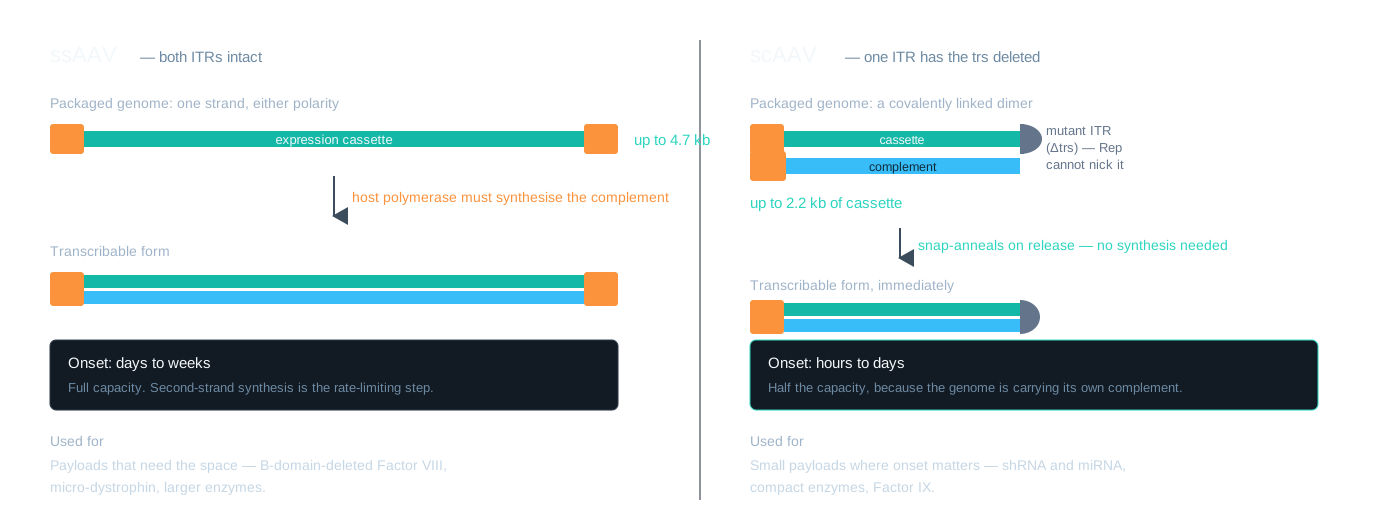
McCarty, Monahan, and Samulski (2001)
Getting In
Eight steps between the syringe and a transcribing genome. Most of the dose does not survive them.
From the Needle to the Cell
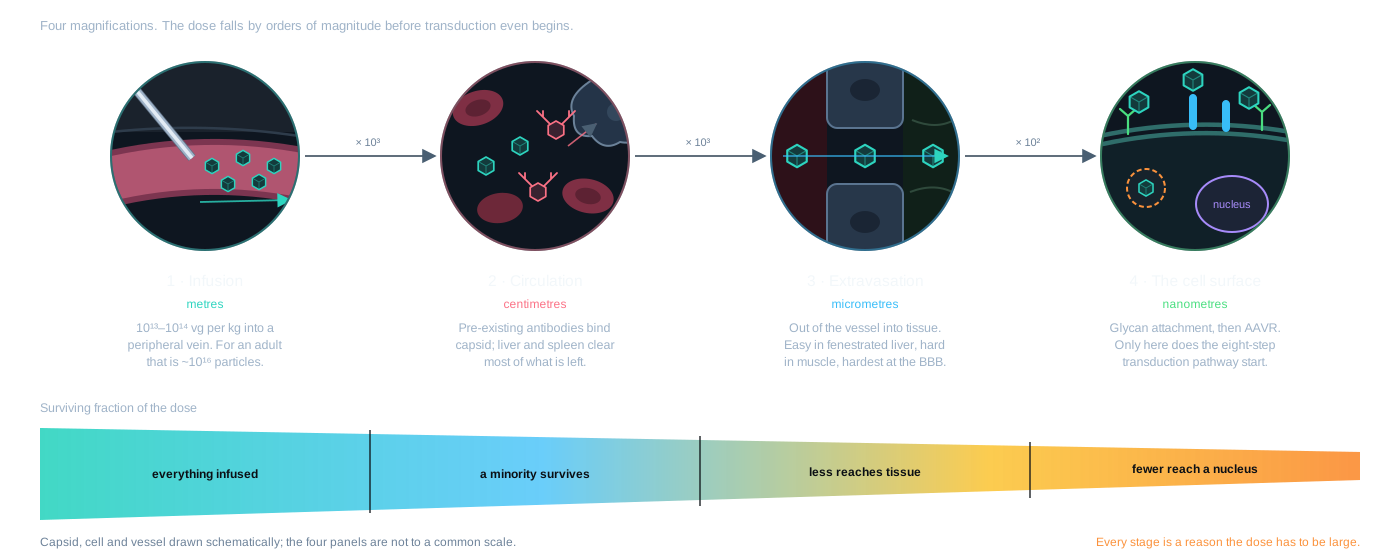
Mingozzi and High (2013)
The Journey In, Step by Step
Two Bottlenecks Inside the Cell
Endosomal escape
Needs VP1u’s PLA₂ domain, externalised at low pH.
Five copies per capsid.
Second-strand synthesis
The packaged strand is transcriptionally inert until it is made double-stranded.
scAAV exists to skip this.
Potency also depends on targeting, nuclear entry, uncoating and expression.
What the Genome Becomes
- Second strand synthesised
- Host repair joins vector DNA ends
- Circular monomers and concatemers
- Chromatinised with host nucleosomes
The damage response is not evaded. MRN and ATM/ATR sense those hairpin ends.
Nakai et al. (2001)
From Hairpin to Chromatin
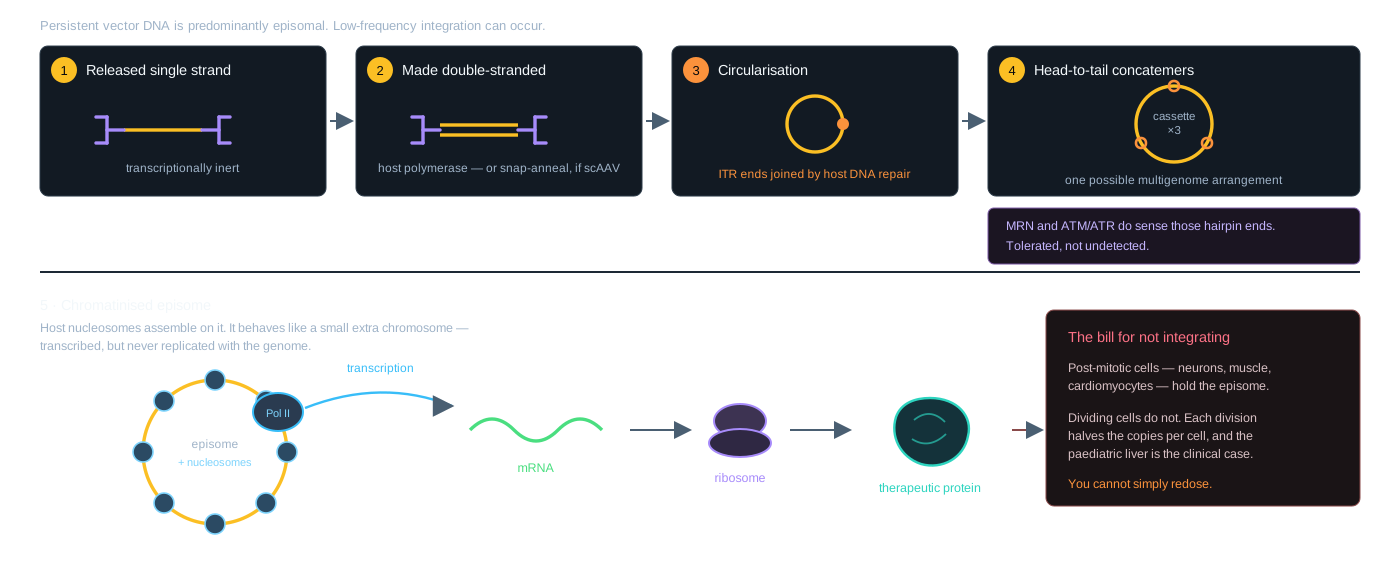
Nakai et al. (2001)
Why Expression Fades
The episome is not replicated when the cell divides.
Post-mitotic — neurons, cardiomyocytes, muscle. Episomes can support durable expression, depending on the tissue and vector.
Dividing — paediatric liver is the clinical case. Hepatocytes expand out from under the vector.
This is the bill for deleting rep.
Wild-type AAV integrated at AAVS1. Recombinant vectors gave that up for safety, and took dilution in exchange.
Decades of expression is the hypothesis under test, not a result.
Nakai et al. (2001)
Making It at Scale
A dose is 10¹³–10¹⁴ genomes per kilogram. For an adult that is a bioprocess, not a bench prep.
Two Platforms, Three Components
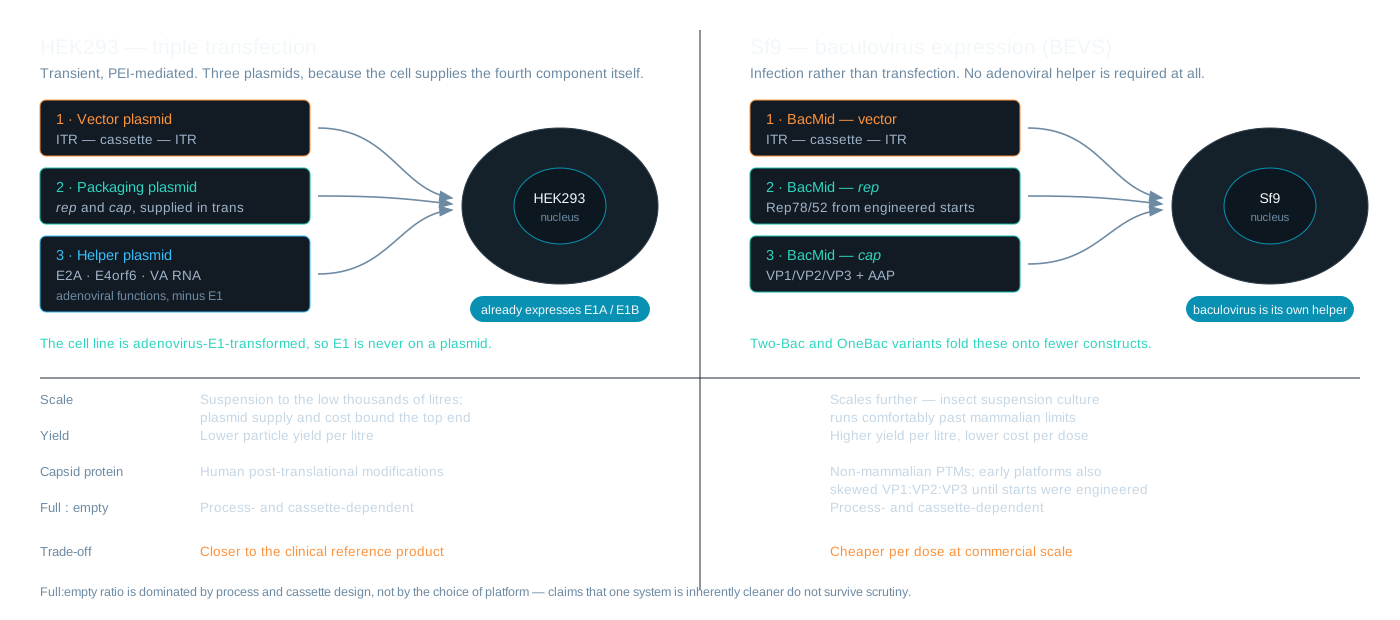
Urabe, Ding, and Kotin (2002)
HEK293 Already Has E1
The helper plasmid carries E2A, E4orf6 and VA RNA.
It does not carry E1.
HEK293 is adenovirus-E1-transformed — that is what makes it HEK293.
E1 functions come from the producer cell. The helper plasmid supplies the remaining adenoviral functions used in this platform.
Helper functions come from both the cell and the plasmid.
Urabe, Ding, and Kotin (2002)
Downstream: Capture, Polish, Concentrate
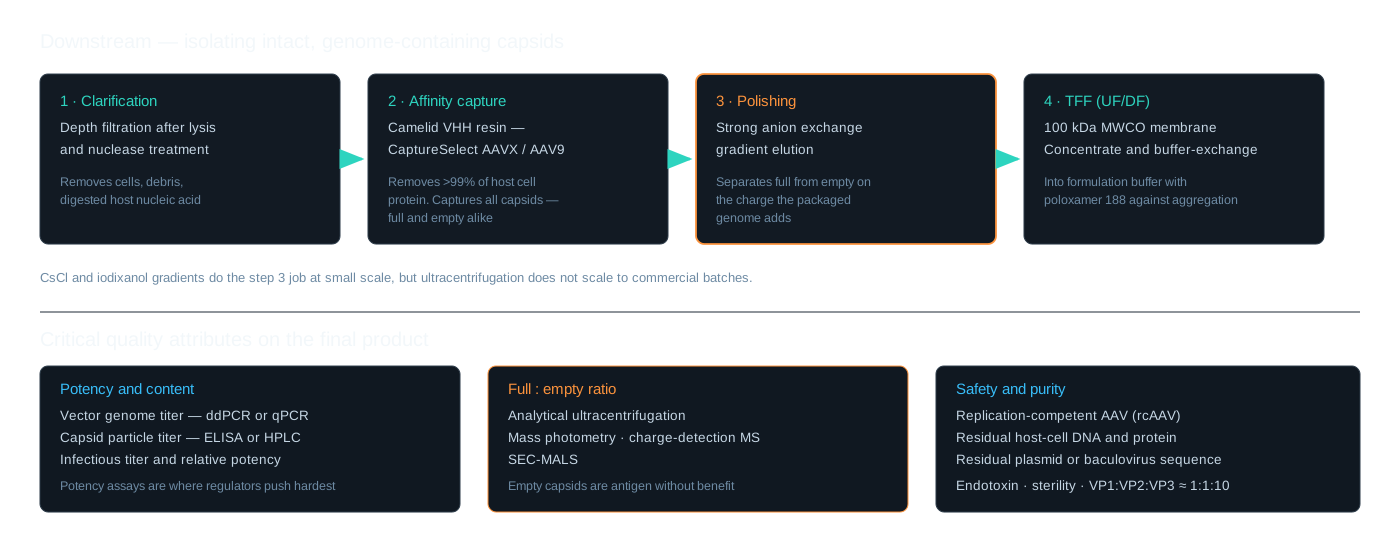
Mingozzi and High (2013)
Empty Capsids Are Not Free
An empty capsid delivers nothing and still:
- presents capsid antigen
- consumes immune tolerance
- counts toward total particle dose
Which is why full:empty ratio is a release-critical attribute and not a cosmetic one.
Measured by AUC, mass photometry, charge-detection MS.
Antigen without benefit.
Mingozzi and High (2013)
The Dose Ceiling
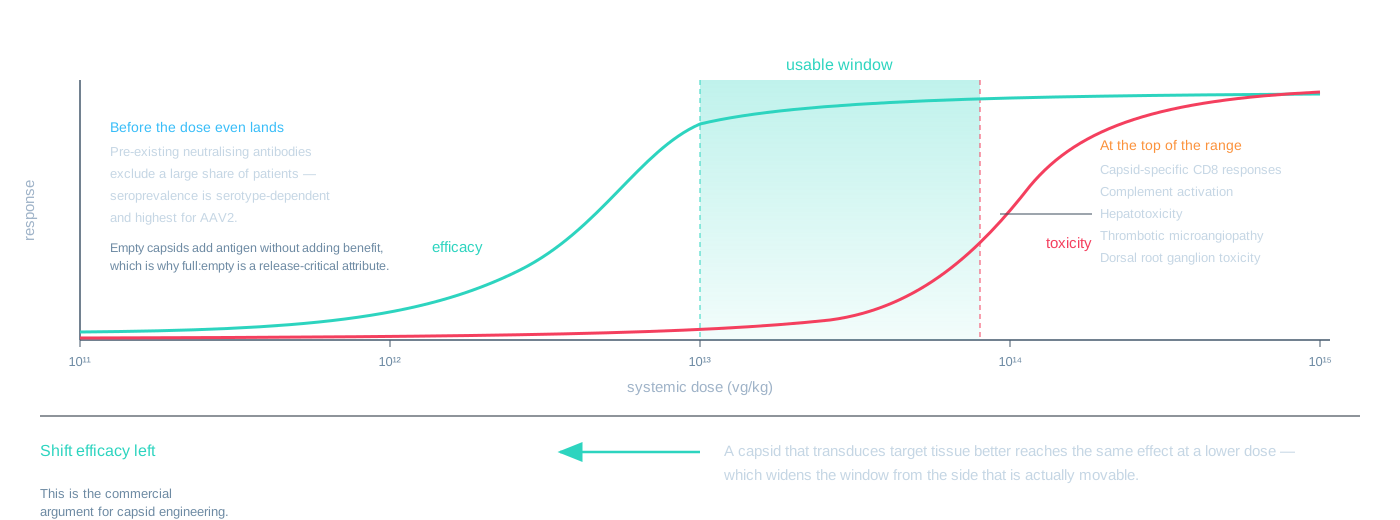
Efficacy rises with dose. So does toxicity. The gap between them is the whole problem.
The Therapeutic Window
Three Ways the Dose Fails
Before
Pre-existing neutralising antibodies exclude a large share of patients. Worst for AAV2.
At dose
Capsid-specific CD8 T cells clear transduced hepatocytes — expression rises, then falls.
Above dose
Complement, hepatotoxicity, thrombotic microangiopathy, dorsal root ganglion toxicity.
Unmethylated CpG can activate TLR9 and promote adaptive responses. These toxicities have multiple mechanisms.
Engineering the Modules
Three parts of the cassette can be designed: the capsid, the promoter, the ITRs. Each is a different kind of search.
Three Modules, Three Searches
Capsid
Where it goes, and whether antibodies see it.
A protein-surface problem.
Promoter
Which cells express, and how much.
A regulatory-grammar problem.
ITR
Packaging, persistence, and innate sensing.
A structure-constrained problem.
The Search Space Is the Problem
VP1 is 735 residues.
A 60-residue window is 20⁶⁰ ≈ 1.15 × 10⁷⁸ — about the atom count of the observable universe. It takes 62 to exceed it.
But nobody designs the whole capsid.
A 7-mer insertion at VR-VIII is 20⁷ ≈ 1.3 × 10⁹ — and that already outruns any in vivo screen.
Romero and Arnold (2009)
Capsid Shuffling
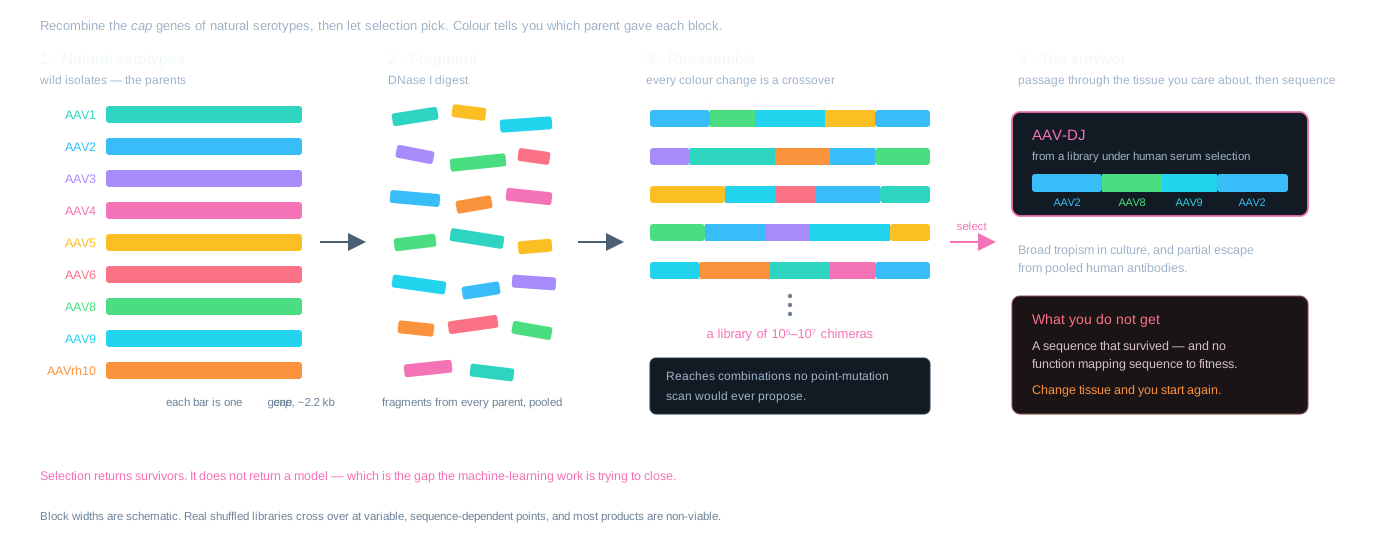
Fragment the cap genes of several serotypes, reassemble, select. Every chimera is a mosaic of whichever parents crossed over.
Grimm et al. (2008)
What Shuffling Produced
Grimm et al. (2008)
Peptide Display: One Loop, a Billion Variants
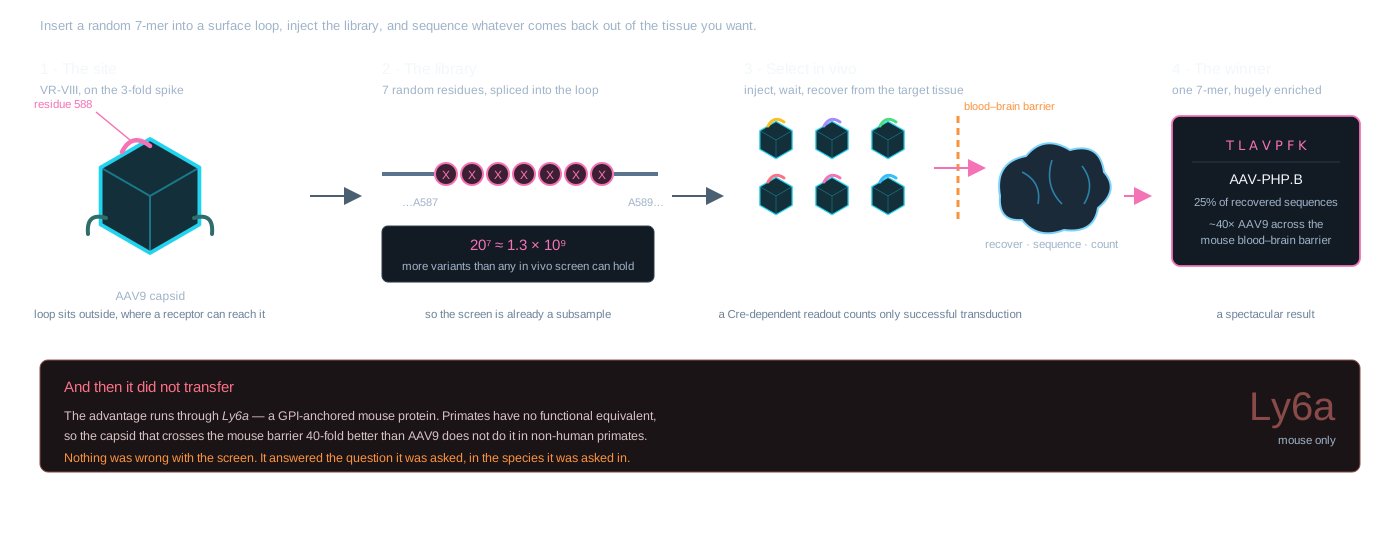
The screen was right. The model organism was the problem.
Deverman et al. (2016)
What a Random Forest Actually Computes
Tabular features, interpretable splits, no gradients — the baseline a sequence model has to beat.
Breiman (2001)
From Mouse to Macaque
Fit4Function — fit one model per measurable property, on a library that uniformly samples manufacturable sequence space.
Six properties: production fitness, mouse liver transduction, and binding and transduction in each of two human liver cell lines.
Six models combined to design a liver-targeted, manufacturable library. 88% of variants met all six criteria.
No single predictor transfers. The six together do.
Eid et al. (2024)
Predicting Fitness Before You Measure It
Mikos, Chen & Suh (Rice) asked a narrower question: can you predict production fitness from structure alone?
Features describing each residue’s structural microenvironment — no measured AAV fitness used as training labels at all.
Reported threefold enrichment in mutations beating wild-type production, compared with random mutagenesis. Preprint, p = 7.5 × 10⁻¹².
Production fitness is unglamorous and gates everything — a capsid you cannot manufacture is not a capsid.
The columns you can compute before you run anything.
Mikos, Chen, and Suh (2021)
Discriminative or Generative
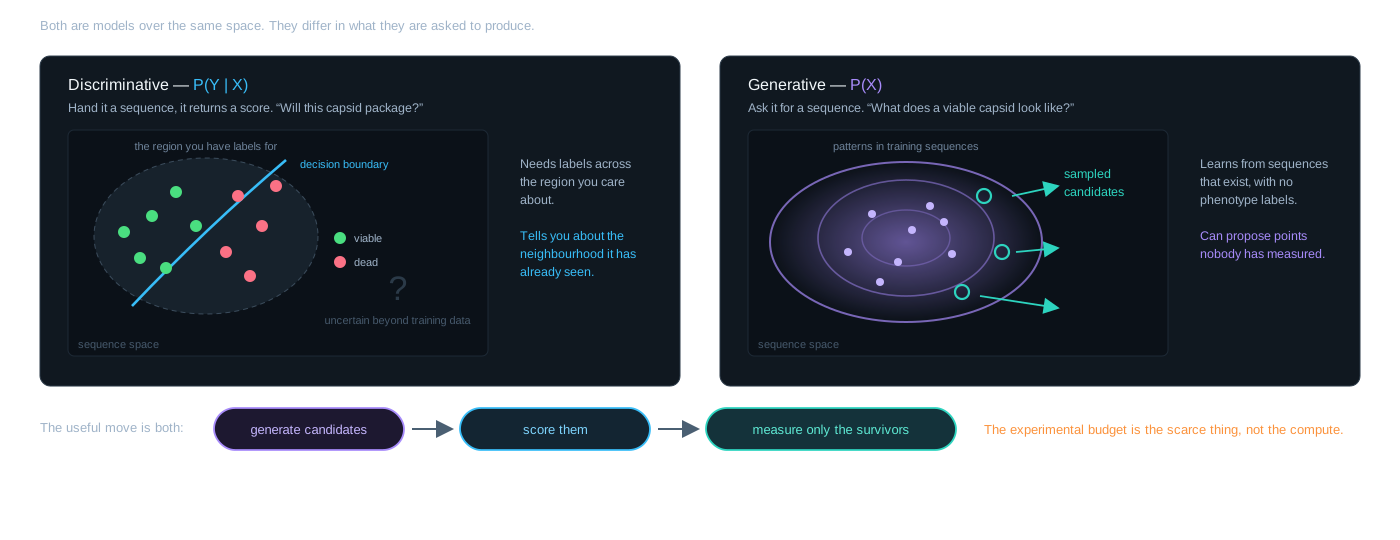
Ng and Jordan (2001)
What a VAE Actually Does
Encoder squeezes a sequence into a few numbers.
Decoder rebuilds a sequence from them.
Training forces the middle to be a smooth, well-populated cloud — so you can sample it, and interpolate across it.
The Generative Toolkit
VAE — smooth latent space, easy to sample and interpolate
GAN — sharp samples, harder to train, no likelihood
Diffusion — strong sample quality, slower to generate
Autoregressive / protein language models — trained on everything nature has made, then conditioned
Good at “does this look like a real protein”, which is exactly the prior we want.
The model class matters less than the data it is fitted to.
Bryant et al. (2021)
What Deep Mutational Scanning Measures
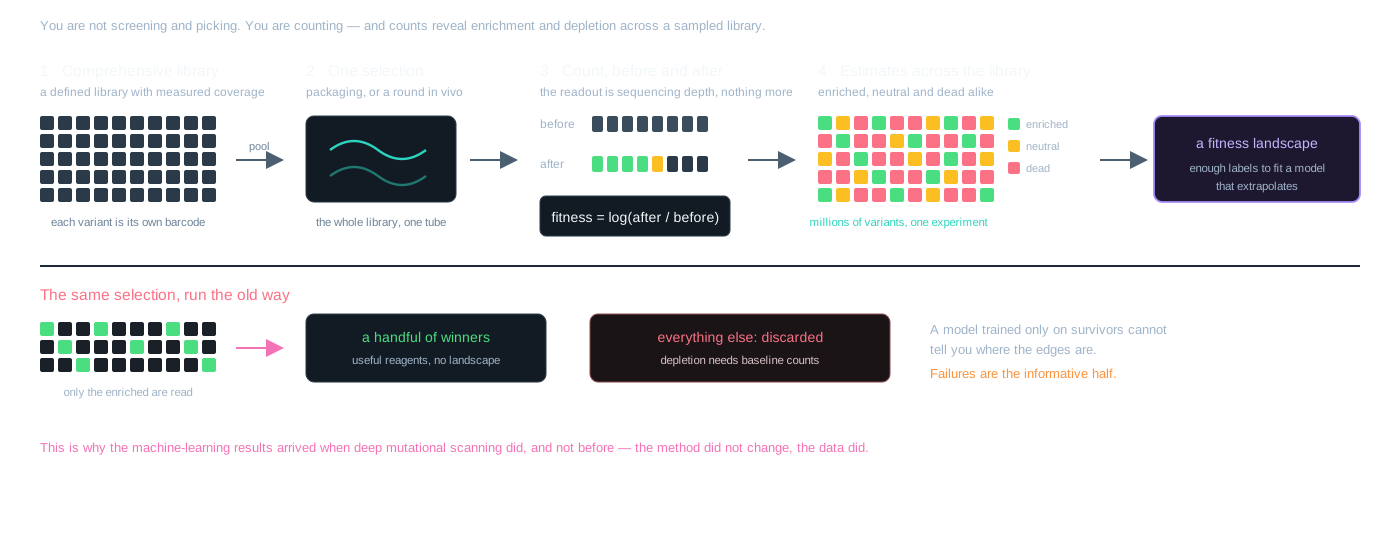
Counts before and after selection reveal both enrichment and depletion.
Ogden et al. (2019)
Machine-Guided Capsid Design
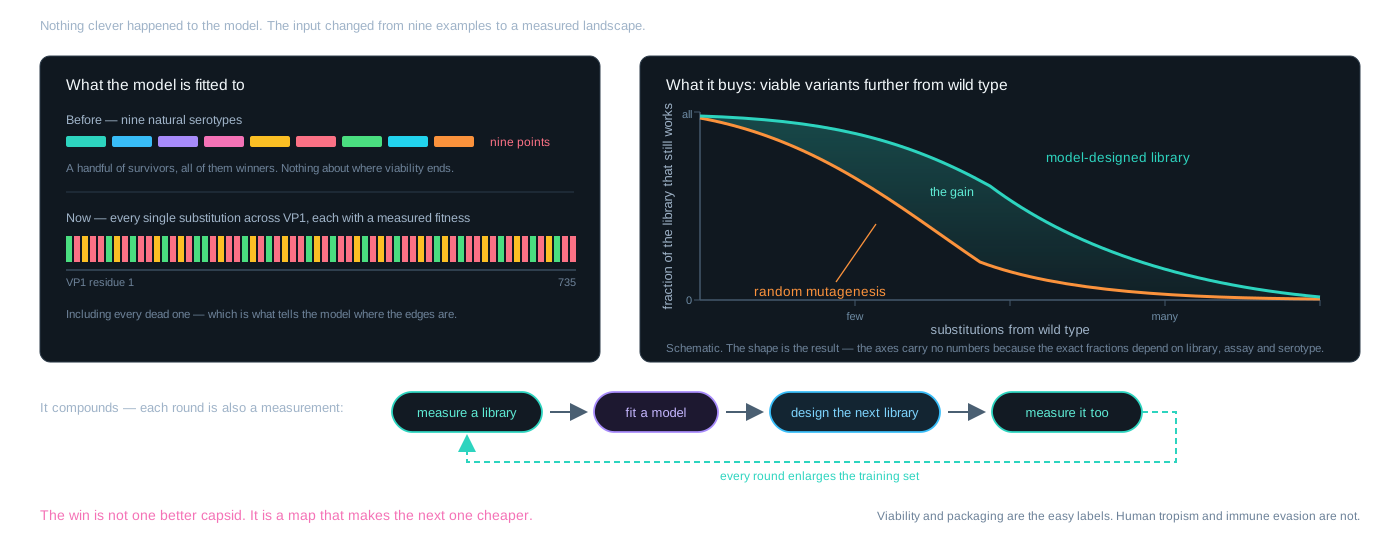
Sequence → fitness, learned rather than assumed.
Promoter Engineering: The Underrated Module
The objective: express only in the target tissue, in as few bases as possible.
Every base here is a base not spent on the transgene.
Build from transcription-factor binding motifs and chromatin accessibility data rather than borrowing a viral promoter.
Why it matters beyond size:
- off-target expression is a safety problem
- ubiquitous promoters invite transgene-directed immunity
- a tissue-restricted promoter can replace a more exotic capsid
Specificity bought with sequence instead of tropism.
Gray et al. (2011)
Synthetic Promoters That Work
Michael RobertsSynpromics → AskBio → Bayer · now Chromatin Bioscience
Built promoters from screened motif libraries assembled into compact, tissue-selective elements — rather than repurposing CMV or a native regulatory region.
AMT-191 — AAV5 carrying GLA for Fabry disease, under a Synpromics liver-selective promoter.
Initial four-patient cohort: 27–208× mean normal α-Gal A activity. Sponsor report, July 2025 data cutoff.
A designed promoter, not a borrowed one.
uniQure (2025)
Why CpG Reads as Danger
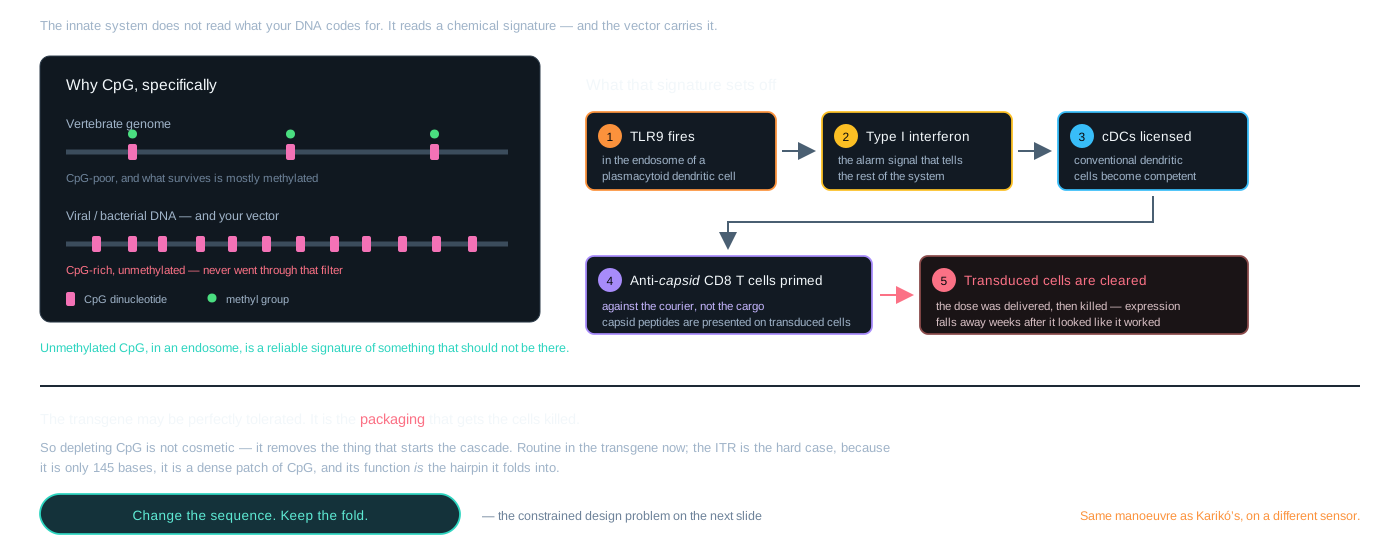
The innate signal is what turns a delivery event into an immune response.
ITR Engineering: Change the Sequence, Keep the Fold
The hardest module. The ITR must still fold into the hairpin Rep nicks.
And it is a dense patch of CpG — the motif TLR9 reads as “infection”.
145 bases, and every change is a large fraction of them.
Faust et al. (2013)
Where This Goes
The binding constraint is the dose ceiling.
A better capsid reaches the same effect at a lower dose — below the toxicity curve, below the T cell threshold, and cheaper to make.
One objective, three problems solved.
What would actually move the field:
- labels that mean human tropism
- models that transfer across serotypes
- immune evasion as a trainable objective
- a regulatory path for sequences with no natural counterpart
The biology set the constraints. What is left is a search problem.
References
Credits
Structures — RCSB PDB. AAV2 1LP3, AAV9 3UX1. Icosahedral assemblies expanded in-browser from the deposited asymmetric units.
Software — three.js and NGL Viewer, both MIT, vendored into this repository.
Diagrams — drawn for this deck; MIT with the rest of the source.
Portraits — via Wikimedia Commons. CC BY-SA 4.0:
- Uğur Şahin, Özlem Türeci — © BioNTech SE
- Katalin Karikó — © University of Szeged
Public domain: Jimmy Carter — Lauren Gerson, LBJ Presidential Library, 2014.
Plate — Duchenne de Boulogne (1868), public domain.
No photograph of an identifiable patient appears here without their own disclosure. President Carter announced his diagnosis and his treatment publicly, himself. The Duchenne figure is an 1868 engraving, not a photograph of a living child.